
Safe Headphone & Room Decibel Chart: How to Measure Noise Exposure on Android
Understand real-world decibel (dB) thresholds—from quiet bedrooms to gyms and live concerts—and check ambient sound levels in real time on your phone.
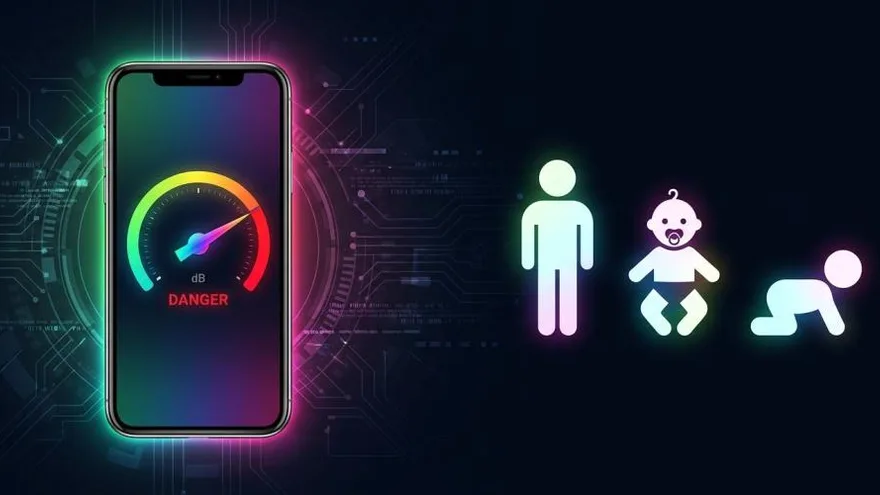
Because human ears adapt quickly to loud environments, a noisy spin class, crowded bar, workshop tool, or concert hall often feels comfortable right up until you walk outside with ringing ears.
Understanding how the logarithmic decibel (dB) scale works—and doing a 5-second spot check with EarSafe Guard: Sound Meter—helps you protect long-term hearing clarity without guesswork.
Quick Reference: Everyday Decibel Levels & Safe Exposure
Public-health hearing guidelines generally treat 85 dB as the threshold where prolonged daily exposure starts causing cumulative inner-ear fatigue:
| Sound Level | Everyday Example | Recommended Max Continuous Exposure |
|---|---|---|
| 30–40 dB | Quiet bedroom at night, library | Unlimited (ideal for deep sleep) |
| 55–65 dB | Normal conversation, background café | Unlimited |
| 75–80 dB | Busy city traffic, vacuum cleaner | All day with low risk |
| 85 dB | Loud gym music, blender, heavy transit | ~8 hours max |
| 94–95 dB | Power lawnmower, packed sports bar | ~1 hour before ear fatigue |
| 100+ dB | Nightclub speakers, live concert, power saw | < 15 minutes without earplugs |
Getting Accurate Ambient Readings on Android
- Uncover the Bottom Microphone: Hold your phone comfortably at arm’s length with the microphone port unobstructed by fingers or thick case flaps.
- Watch Average (
AVG) vs. Peak (MAX): A single door slam spikes Peak dB, whereas Average dB over 15–30 seconds tells you your true sustained room exposure. - Zero Audio Recording: EarSafe Guard computes amplitude levels strictly in live memory on your device—nothing is ever recorded, saved, or sent off your phone.
EarSafe Guard: Sound Meter
Measure ambient noise in real time with live min/avg/peak dB readouts and instant hearing-safety exposure thresholds.
Frequently Asked Questions
Why does a 10 dB increase sound twice as loud? +
Decibels use a logarithmic scale rather than a linear one. Every +3 dB doubles acoustic energy, and a +10 dB jump is perceived by human ears as roughly twice as loud—cutting safe listening time drastically.
More Android Guides
All Articles →AI Video Camera Movement Prompts Guide: Dolly, Pan, Orbit & FPV Verbs That Actually Work
Master the exact cinematography terms—gimbal dolly push-in, 180-degree orbit, low-angle chase rig, crane reveal, and handheld 35mm drift—that unlock pro AI videos on Android.
AI Video TutorialsHow to Animate Any Still Portrait into a Cinematic Video Reel on Android
Step-by-step workflow to turn a static portrait, fashion shot, or AI artwork into a smooth 9:16 video clip with natural camera motion and breeze physics using VibeAI.
Google Pixel GuidesHow to Automatically Change Wallpapers on Google Pixel from a Local Folder
Google Pixel's built-in Wallpaper & Style app only rotates curated Google collections once a day. Here is how to auto-rotate your own offline local folders or MP4 videos on Pixel 6, 7, 8, 9 & 10.